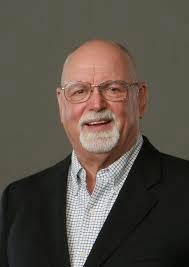
Showing posts with label Dennis Miller. Show all posts

Wednesday, September 10, 2014

What Chimpanzees Can Teach Us about Convertible Bonds

By Dennis Miller

In a renewed commitment to finally learn Spanish, one of my colleagues spent quite a bit of time this week awkwardly saying, “QuĂ© es eso?” into the headset Rosetta Stone provides with its language learning programs. Translation: “What’s that?”

Here in the US, the 10,000 or so people reaching retirement age each day often find themselves asking the same question—though maybe not out loud—when advisors use terms of art or casually mention sophisticated investment options. What’s that? Most of these folks didn’t earn their living in the financial services sector, so they don’t speak the language—nor should they feel embarrassed about it.

That said, no one—particularly risk-adverse retirees—should ever invest in something they don’t understand. So let me add one more type of investment to your “I know about that” toolbox: convertible bonds. Despite their obscurity, they’re not the least bit complicated.
Put simply, convertible bonds:
  • have, as a rule of thumb, two-thirds of the upside of common stock and one-third of the downside; and
  • can be an excellent way to diversify your portfolio.

Convertible bonds are bonds an investor (let’s say it’s you) can convert into common stock of the issuing company under certain circumstances. Imagine, for example, that Rosetta Stone wants to finance a new project—maybe it’s doing R&D on how to teach humans to speak the language of chimpanzees (hey, this is purely hypothetical). So Rosetta Stone (RST), which has a current stock price of about $8.80, issues a convertible bond and sets the conversion rate so that it’s not profitable to convert your bonds unless the stock price rises, say to $11.

Then more people start to feel a burning need to learn Spanish—or Mandarin, or Farsi—and RST’s price passes $11. At that point, you can convert your bonds into shares of RST worth more than the stream of payments from the bond alone. You own bonds with upside potential.

If RST’s price goes up, the value of your convertible bond goes with it. If it goes down, the discounted stream of underlying cash flows (the bonds’ coupon payments plus return of the principal at maturity) act as a price floor.

Now imagine that speaking multiple languages goes out of vogue, and instead of rising past $11.00, RST drops to $4.00. You’ll still receive interest and principal—meaning your convertible bonds can’t be worth less than those payments.

Of course, there’s always the threat of default. Say Rosetta Stone goes bankrupt for one reason or another (maybe it overspent on the chimp project, and it failed). The silver lining is that you’ll have a better chance of getting some money back than if you owned common stock.

What You Trade for the Option to Convert


As with any investment, there are trade offs: convertible bonds have slightly lower yields. The company pays a lower interest rate, and in exchange you have the option to convert your bonds. Also, convertible bonds often fall into the high yield/junk-bond category.

What’s more, it’s often only feasible for individuals to invest in convertible bonds through convertible bond funds. And you know what that means: fees. With an average expense ratio of 1.25%, fund managers have to get past that hurdle before they can start making you money.

With that, why would anyone want to buy a convertible bond fund? In a word, diversification. We hold one convertible bond fund in our retirement-specific portfolio for downside protection and the diversification it provides. With a gross expense ratio of 0.4% and one-third of its holdings in investment-grade bonds, this particular fund avoids the major pitfalls of most convertible bond funds.

Less common investments are worth knowing about, but understanding them doesn’t mean you should jump in whole hog—particularly when you’re investing your retirement nest egg. And that’s our focus at Miller’s Money: plain-English financial education and smart retirement investing. Read our free weekly e-letter, Miller’s Money Weekly every Thursday by signing up here.


Catch Thursday evenings webinar "Beating the Market Makers Trading Weekly Options"....Just Click Here!

Wednesday, September 3, 2014

How You Can Play to Win When Market Makers Are Calling the Shots

By Dennis Miller

The American Legion sponsored a carnival every summer when I was a young lad. My dad was a legionnaire, so each year I had a job. Beginning at age 12, I hauled soft drinks and food to the various concession booths well into the night, which probably violated some labor laws.

Dad warned me about the carnival barkers, telling me to never play games where you try to win a giant teddy bear. They were rigged, he said, and no one ever wins—“So don’t waste your money.”

I questioned Dad’s advice when I saw other boys carrying giant teddy bears to the delight of cute teenage girls. So I quietly watched some of the games. Some people won silly goldfish, but few won the giant teddy bear.

Then I befriended some of the carnival workers and told them what my dad had said. To my surprise, they took his remarks personally. Each one stepped outside his booth to demonstrate just how easy it was to win by pinging ducks or knocking over little stuffed clowns with ease. The guy who shot the BBs told me to ignore the rear sights because they were off center. He also told me exactly where to hit the moving duck to make it go down. Ping, ping, ping! He knocked them down one after another.

He argued that the game was not rigged; if it were, eventually no one would play. But the odds were tilted toward those who practiced. I tried it, lost a dollar (one hour’s pay), and realized it was cheaper to buy the teddy bear than to spend the money to learn how to win consistently.

I think about those carnival games often, when friends and readers ask about market makers, brokers who help keep markets liquid and profit in the process. Do they just hold a unique position, or is something fishy going on?

24 Men Make History Under a Buttonwood Tree


Let’s take a step back to answer that question. The history of what would later become the New York Stock Exchange began in 1792, when 24 brokers and merchants signed the Buttonwood Agreement outside 68 Wall Street—under a buttonwood tree, of course.

The securities market grew, particularly in the aftermath of the War of 1812, and in 1817, a group of brokers established the New York Stock & Exchange Board (NYS&EB) at 40 Wall Street. At that time, stocks were traded in a “call market” during one morning and one afternoon trading session each day. A call market is exactly what it sounds like: a list of stocks was read aloud as brokers traded each in turn.

Whatever the benefits of this seemingly orderly system, it did not foster liquidity, and in 1871 the exchange, which had been rechristened as the New York Stock Exchange (NYSE) in 1863, began trading stocks continually throughout the day. Under the new system, brokers dealing in one stock stayed put at a set location on the trading floor. This was the birth of the specialist.

Designated Market Makers (DMMs), who are assigned to various securities listed on the exchange, have since replaced specialists. DMMs are one type of market marker, which are broker-dealers who streamline trading and make markets more liquid by posting bid and ask prices and maintaining inventories of specific shares.

Since the NYSE is an auction-based market, where traders meet in-person on the floor of the exchange, the DMMs, who represent firms, maintain a physical presence on the floor. Unlike the NYSE, the National Association of Securities Dealers Automated Quotations (NASDAQ) is an exclusively electronic exchange. Plus, it has approximately 300 competing market makers (not physically present at the exchange). Stocks listed on the Nasdaq have an average of 14 market makers per stock, and they are all required to post firm bid and ask prices.

Why Market Makers Matter to Retail Investors


You may be thinking, “That’s great, but why should any of this matter to me?” Well, because the existence of market makers should affect a few of your trading habits—for thinly traded stocks in particular.

Trades are not automatically executed via magical computer elves. When you place a buy or sell order (likely via the Internet), your broker can choose how to execute your trade.

When you place an order for a stock listed on the NYSE or some other exchange, your broker can pass that order on to that particular exchange, or it can send it to another exchange, such as a regional exchange. However, your broker also has the option of sending your order to a third market maker, a firm ready to buy and sell at a publicly quoted price. It’s worthwhile to note that some market makers actually pay brokers to route orders their way—say, a about penny or so per share.

On the other hand, your broker will likely send your order for a stock traded on the Nasdaq, an over-the-counter market, to one of the competing Nasdaq market makers.

And of course, your broker can always fill your order out of its own inventory in order to make money on the spread—the difference between the purchase and sale prices. Or it can send your order (limit orders in particular), to an electronic communications network (ENC), where buy and sell orders of the same price are automatically matched.

With that in mind, there are two steps you should take to make the most of your trades:

Always place orders at limit prices, as opposed to market prices.

As of Tuesday, the price for Coca-Cola is a bid of $41.23, and the ask price is $41.24; the spread is a penny.

If you put in an order to buy at $41.24, a market maker could buy at $41.23 and sell it to you for $41.24, pocketing a penny per share. If you buy 100 shares, they make $1.00. That is their profit for making the market.

If you put an order in at “market,” it can cost you a lot more. The depth of the current bids goes all the way down to buy at $34.01 (there are a couple of orders to buy KO for $22.12 and even one as low as $3.00, but the probability they will be filled is negligible), and the sell side goes up to $53.68 (again, there is one order to sell KO at $88 but this investor won’t find a counterparty in his right mind that would take it). That means there are currently orders sitting with the market maker to be executed at those respective prices.

If the market maker sees a market order, he would buy the stock at $41.23 and sell it at a much higher price. A market order is basically a license for the market maker to steal. You want the best price for any stock you’re trading; entering a market order will ensure you don’t get it.

The spreads for thinly traded stocks are generally larger. If you want to buy, you can offer a lower price than the bid, or perhaps a penny higher. If you want to trade several thousand shares, consider doing so in small tranches, so you don’t show your full hand to the market maker.

Know the role market makers play when executing stop losses.

For the Miller's Money Forever portfolio we generally set a trailing stop loss when we buy a stock. Entering a stop loss order with your broker will automatically generate a sell order should the stock drop to that number. A market maker can see that number and may drop down to buy your stock at the low price and then resell it for a profit.

As a practical matter, I set stop losses for big companies like Coca-Cola that trade millions of shares per day. The stop loss was there for a reason, and I don’t want to risk the price dropping further before I can sell it.

Some pundits think you should never enter a stop loss with your broker. They prefer another method: a stop loss alert, which many brokerage firms offer. They notify you through an email or text message if the stock drops to the stop loss price, and then you can go to your computer and enter the sell order. We always use the alert for thinly traded stocks, so we’re less vulnerable to an aggressive market maker.

If you are concerned about showing your hand to the market maker, by all means, use a stop loss alert. If you think the risk associated with stop losses is minimal for high-volume stocks, you may want to use both stop losses and stop loss alerts, depending on the stock.

Whether any of this means the market is “rigged,” I’ll leave to those $500-per-hour lawyers to hash out. This is the game we’re playing, so it’s critical to understand the rules, whether we like them or not.

Whether you’re a retail investor or just a guy shooting at moving ducks at a carnival, you need knowledge and skills to succeed. My free weekly missive, Miller’s Money Weekly, exists for that very reason. We provide retirement investors with the education and tools essential for a rich retirement. Receive your complimentary copy each Thursday by signing up here.


Make sure to check out our "Beginners Guide to Trading Options"....Just Click Here!


Thursday, July 24, 2014

When All You Have Left Is the Cost of Breakfast at McDonald’s

By Dennis Miller

When I was 20 years old, I sat through my first day of a business law course at Northwestern University. The professor began by writing two words on the blackboard (in the prehistoric days of blackboards and chalk): Caveat emptor. He raised his voice and said, “Let the buyer beware!” I’m here to echo his warning, but this time it’s about annuities.


Annuities are at the top of the list of complicated products that often profit insurance companies without adequately compensating the buyer in return. Put plainly, sometimes you don’t get what you thought you paid for.

And, while annuities are often described as a “transfer of risk,” which is basically correct, owning an annuity will not transfer the risk of one of the greatest hazard’s to a retiree’s financial security: inflation. Inflation isn’t the only risk to worry about—lack of liquidity and insurance company default should also top your list of concerns—but it can be the most treacherous for someone with an annuity heavy portfolio.

Will an annuity protect your lifestyle? In the short term, it might. If you believe the Federal Reserve when it says it will keep inflation at 2% or less, perhaps it will for a period of time. Even then, inflation will eat away at the buying power of your annuity payout fairly quickly. You are contractually guaranteed income; however, that does not guarantee your lifestyle.

To see the effect, my analysts and I charted the purchasing power of a single premium immediate lifetime annuity with installment refund, which pays $583.33 per month. We’ve compared several inflation scenarios: the currently tame 2% inflation rate; the long run average of about 3%; and the possibility of things getting considerably worse at 7% inflation. We’re not even talking about hyperinflation—just reasonable estimates.


Even at the low 2% inflation rate, your $583.33 benefit would only have the purchasing power of $392.56 after 20 years. In the 7% inflation scenario, the purchasing power would be down to $150.74. Let’s put this into context.

The average U.S. electricity bill is around $103.67. The average cellphone bill is $111. According to the USDA, an elderly household of two that’s being extremely thrifty could get its monthly grocery bill down to as low as $357.30 per month. In total, that’s $571.97 – leaving just enough for a McDonald’s breakfast.

Right off the bat, that isn’t so bad. The annuity takes care of the cellphones, the electricity, the groceries, and leaves a little extra. However, after 20 years at 2% inflation and a purchasing power of $392.56, the benefit would only be enough to pay for the thrifty grocery budget, leaving only $35.26 left over. Though your annuity benefits are the same, prices have risen, so now you have less purchasing power.

After 20 years of 3% inflation, it gets even worse. With $219.85 in purchasing power, you’ll have to weigh either purchasing 2/3 of your usual groceries against paying the electricity and phones. You won’t be able to do it all. By the third year, you will need to add funds to your annuity payment to cover those expenses.

And under the 7% scenario, you’ll only be able to pay for the electricity bill with less than $50 in purchasing power left over. That’s hardly the lifetime income most annuity buyers had in mind.

Furthermore, consider that our assumptions are a little optimistic. In all likelihood, your electricity and grocery bills will probably rise faster than the rate of inflation. If that’s the case, then you’d be in real trouble.
So, while annuities promise guaranteed income, they certainly do not guarantee what that income will afford you in the future.

Annuity policies can be structured with inflation protection, but those options are expensive in terms of the lower initial payments. With benefits starting so much lower, you would have to live an exceptionally long time to make them work out.

Depending on your circumstances, an annuity might play a useful role in your long-term financial plans. There is much to be said for transferring some risk to a quality insurance company. However, transfering one risk without planning for another could be catastrophic. Even something like a 5% inflation rider might not protect you if higher inflation rates become a reality. If a considerable portion of your portfolio is in annuities, then another portion needs to be balanced to fight inflation, with holdings such as precious metals.

While it’s impossible to make the risk of inflation go away, there are a few simple things you can do to minimize it:
  • Never hold a very large portion of your portfolio in annuities. If high inflation picks up you could be entirely cleaned out.
  • If you’re holding annuities, make sure that another part of your portfolio is geared to hedge against inflation.
Now, I’m not shouting caveat emptor just for the heck of it. As a retirement advocate and senior editor at Miller’s Money Forever my mandate is transparent financial education for seniors, conservative investors and anyone serious about building a rich retirement. That’s why my team of analysts and I have put together a free, comprehensive special report called Annuities De-Mystified—Three Simple Tools for Choosing the Right Annuity.

Get the full truth on annuities by downloading your complimentary copy of Annuities De-Mystified today.


Another must read from Adam J. Crawford....The Rise of Africa… and How To Play It
 

Wednesday, April 30, 2014

Retirement Investing and Kitchen Table Economics

By Dennis Miller

What is it about retirement that causes confident, successful businessmen and women to lose that edge when they invest their own life savings? Many otherwise dynamic people become virtually impotent in the face of retirement investing. I have many friends who were very effective in business—folks who made sound decisions affecting how millions upon millions of dollars were spent. They would gather the facts, make a plan, and make the right call with confidence. Why was it so taxing for these same friends to manage their personal retirement accounts?


I’m a staunch advocate for gathering around the kitchen table to hash out problems and pass on life lessons. It’s where we gathered as a family to open our mail, pay the bills, and teach (and worry about) our children. I might even say that everything we needed to teach our family about economics, we taught at that kitchen table.

The secret is there is no secret. Investment gurus, stockbrokers, and talking heads like to use fancy words to dazzle. Many would have you believe their university or Wall Street pedigrees give them investing powers outside of your reach. Though many do have a little more knowledge or a little more experience, there is no need to be intimidated by the mystique.

Why? Because you already know most of what you need to know. The underlying principles for protecting and growing wealth during retirement are the same principles that allowed you to make and save that money in the first place.

When former Federal Reserve chairman Alan Greenspan would talk to Congress, many bright people would look at each other and think, “What the hell did he say?” If folks like Greenspan are so darn smart, why couldn’t they predict or prevent the Internet or real estate boom and bust? Why can’t they speak plainly? Don’t let anyone’s “elite” status overshadow your own common sense.

For the last few years, the Federal Reserve has been printing a 100 year supply of money annually. No one needs a PhD in economics to grasp the potential for high inflation. A little knowledge of history and a bit of common sense will tell you where we’re headed.

The key to using kitchen-table economics in retirement is to apply the same fact finding and research skills that made you successful in business. If you are uncomfortable making an investment decision, continue to educate yourself until you are. Of course, it’s sensible to take in input and ideas from experts. Just don’t get caught thinking they have any magic bullets.

If you ask four people to define “rich,” you would likely get four different answers. As we move into retirement, the definition tends to be more practical and realistic. “Rich” is enough money to live comfortably without countless hours of financial worry. It’s also a feeling of pride in the lifetime of work that built your nest egg and an appreciation for each and every trip you get around the sun.

How much do you have; how much do you need to earn to supplement your retirement income; and, how can you invest safely to reach that goal? Retirement investing is no more complicated than that. Simply put, it’s living within your means and protecting what you have.

If I could shout one piece of encouragement to retirees, it would be: Don’t let the fear of losing money immobilize you! Doing nothing can be just as dangerous as risking too much on a speculative or even downright foolish investment.

You may recall the old adage about the banker who never made a loan because he was afraid he might lose money. When the bank went out of business, he claimed it wasn’t his fault. After all, he never made a bad loan during his tenure.

To make your retirement money last, you have to take on some risk. There are, however, proven ways to limit that risk to manageable doses: sector, geographical, and political diversification, trailing stop losses—the list goes on. Good investors will lose money from time to time and learn from their mistakes. You just need to learn and make the right judgment call more often than not.

Don’t fret when others brag about how well they’re doing. Each year financial newsletters, mutual funds, and investment managers like to boast about how much money they’ve made their clients. Accountability is a good thing; we’re certainly proud of our own track record.

Though, when I see the list of top-performing funds ranked by the amount of annual return, my first questions are: How much did they risk to get there? Have they performed that well consistently? How much of those profits were eaten in fees?

Some mutual funds occasionally produce nice gains for their shareholders. I, however, would put my money on the well educated grandfather investing from his kitchen table in Iowa any day of the week. Why? A recent report indicated that 78% of all US domestic equity funds were outperformed by their benchmarks during the past three years. Large caps were worse, with 86% of falling short of their benchmarks.
Benchmarks are the indices in the sectors funds specialize in, respectively. In short, there are countless statistics indicating that you can invest just as well as a fund manager.

Those numbers should embolden you, not frighten you. I shared them to keep things in perspective. There is no magic wizardry, secret code, or special knowledge. All investors gather facts, make an evaluation, and then allocate some money based on what they think the future will bring. Those are skills that can be honed through education and experience by smart folks sitting at their kitchen tables or in their home offices.

I’m happy to report that the most frequent comment we receive is that our newsletter explains investments in plain English. There’s a reason for that: the investments well suited for a conservative investor’s retirement portfolio are not that complicated.

You can overcome retirement impotence. The best way to build your confidence is to learn ways to invest safely. We think teaching our premium subscribers about protective mechanisms like asset allocation, diversification, position limits, trailing stop losses, and internationalization is just as important as the individual picks in the Money Forever portfolio. If you’d like to learn more too, sign up for a no-risk trial subscription today by clicking here.

The article Kitchen Table Economics was originally published at Millers Money


How do you start trading crude oil? Right here with our "Intro to Crude Oil Video"....Just Click Here!


Saturday, April 26, 2014

Not All Debt Is Created Equal

By Dennis Miller

Optimal diversification: We all want it. Diversification is, after all, the holy grail of portfolio management. Our senior research analyst Andrey Dashkov has said that many times before, and he echoes that refrain in his editorial guest spot below.

A brief note before I hand over the reins to Andrey. The last time the market tanked, many of my friends suffered huge losses. They all thought their portfolios were well diversified. Many held several mutual funds and thought their plans were foolproof. Sad to say, those funds dropped in tandem with the rapidly falling market. Our readers need not suffer a similar fate.

Enter Andrey, who’s here to explain what optimal diversification is and to share concrete tools for implementing it in your own portfolio.

Take it away, Andrey…


Floating-Rate Funds Bolster Diversification

By Andrey Dashkov
Floating rate funds as an investment class are a good diversifier for a portfolio that includes stocks, bonds, and other types of investments. Here’s a bit of data to back that claim.

The chart below shows the correlation of floating rate benchmark to various subsets of the debt universe.
As a reminder, correlation is a measure of how two assets move in relation to each other. This relationship is usually measured by a correlation coefficient that ranges from -1 to +1. A coefficient of +1 says the two securities or asset types move in lockstep. A coefficient of -1 means they move in opposite directions. When one goes up, the other goes down. A correlation coefficient of 0 means they aren’t related at all and move independently.

Why Correlation Matters


Correlation matters because it helps to diversify your portfolio. If all securities in a portfolio are perfectly correlated and move in the same direction, we are, strictly speaking, screwed or elated. They’ll all move up or down together. When they win, they win big; and when they fall, they fall spectacularly. The risk is enormous.

Our goal is to create a portfolio where securities are not totally correlated. If one goes up or down, the others won’t do the same thing. This helps keep the whole portfolio afloat.

As Dennis mentioned, diversification is the holy grail of portfolio management. We based our Bulletproof strategy on it precisely because it provides safety under any economic scenario. If inflation hits, some stocks will go up, while others will go down or not react at all.

You want to hold stocks that behave differently. Our mantra is to avoid catastrophic losses in any investment under any scenario, and the Bulletproof strategy optimizes our odds of doing just that.

When “Weak” is Preferable


Now, a correlation coefficient may be calculated between stocks or whole investment classes. Stocks, various types of bonds, commodities—they all move in some relationship to one another. The relationship may be positive, negative, strong, weak, or nonexistent. To diversify successfully and make our portfolio robust, we need weak relationships. They make it more likely that if one group of investments moves, the others won’t, thereby keeping our whole portfolio afloat.

Now, back to our chart. It shows the correlation between investment types in relation to floating-rate funds of the sort we introduced into the Money Forever portfolio in January. For corporate high yield debt, for example, the correlation is +0.74. This means that in the past there was a strong likelihood that when the corporate high yield sector moved up or down, the floating rate sector moved in the same direction. You have to remember that correlation describes past events and can change over time. However, it’s a useful tool to look at how closely related investment types are.


I want to make three points with this chart:
  • Floating-rate loans are closely connected to high-yield bonds. The debt itself is similar in nature: credit ratings of the companies issuing high-yield notes or borrowing at floating rates are close; both are risky (although floating-rate debt is less so, and recoveries in case of a default are higher).

    Floating-rate funds as an investment class are not as good a diversifier for a high-yield portfolio. They can, on the other hand, provide protection against rising interest rates. When they go up, the price of floating-rate instruments remains the same, while traditional debt instruments lose value to make up for the increase in yield.
  • Notice that the correlation to the stock market is +0.44. If history is a guide, a falling market will have less effect on our floating-rate investment fund.
  • The chart shows that floating-rate funds serve as an excellent diversifier for a portfolio that’s reasonably mixed and represents the overall US aggregate bond market. The correlation is close to zero: -0.03. This means that movements of the overall US bond market do not coincide with the movements of the floating rate universe.

    Imagine two people walking down a street, when one (the overall debt market) turns left, the other (floating rate funds) would stop, grab a quick pizza, get a message from his friend, catch a cab, and drive away. No relationship at all… at least, not in the observed time period. This is the diversification we’re looking for.
Floating rate funds provide a terrific diversification opportunity for our portfolio. This gives us safety, and that is the key takeaway.

Our Bulletproof income portfolio offers a number of options for diversification above and beyond what’s mentioned here. You can learn all about our Bulletproof Income – and the other reasons it’s such an important one for seniors and savers – here.

The article Not All Debt Is Created Equal was originally published at Millers Money


Don't miss this weeks great webinar with John Carter. “How HFT firms are causing you to lose money trading”. Click Here to Reserve Your Seat Now!


Tuesday, April 22, 2014

10 Ways to Screw up Your Retirement

By Dennis Miller

There are many creative ways to screw up your retirement. Let me show you how it’s done.


Supporting adult children. My wife Jo and I have friends with an unmarried, unemployed daughter who had a child. Our friends adopted their grandchild and are now in their late sixties raising a kid in grade school. The same daughter had a second child, and they adopted that one too. When she announced she was pregnant a third time, they finally said, “Enough! It’s time for a third party adoption.”

Last time I spoke with them, their unemployed daughter and her boyfriend were living in their basement, neither contributing financially nor lifting a finger around the house. What began as a temporary bandage had become a permanent crutch. Our friends love their grandchildren; however, they’ve become bitter.

Jo and I also know of retirees who make their adult children’s car payments. I’m not talking about college-age kids; some of these “children” are close to 50. What’s their justification? “If we don’t make the payments, they won’t be able to go to work.” What I can’t grasp is how these adult children have iPads and iPhones, go on vacations, and do other cool things, but can’t seem to make their car payments.

You are not the family bank. There is generally a brief window of opportunity between children leaving the nest and retirement. Use it to stash away enough money to retire comfortably!

Ignore your health. I served on the reunion committee for my 50th high school class reunion. We diligently tried to track down our classmates, but many had not lived long enough to RSVP to the party. The number of deaths from lung cancer and liver cancer were shocking. Many of those six feet under had been morbidly obese or simply never went to the doctor for checkups.

I know this sounds obvious, but your health choices really do affect how long and how well you live. Retiring only to become homebound because of health problems won’t be much fun.

Not keeping your retirement plan up to date. In the summer of 2013, the Employee Benefit Research Institute (EBRI) published a survey about low-interest-rate policies and their impact on both baby boomers and Generation Xers, who are following right behind. The bottom line (emphasis mine):

“Overall, 25-27 percent of baby boomers and Gen Xers who would have had adequate retirement income under return assumptions based on historical averages are simulated to end up running short of money in retirement if today’s historically low interest rates are assumed to be a permanent condition, assuming retirement income/wealth covers 100 percent of simulated retirement expense.”

It is a sad day when people who thought they’d saved enough realize they have not. Run your personal retirement projection annually to make sure you’re keeping up with the times. Otherwise you may have to work longer or step down your retirement lifestyle—drastically.

Thinking you can continue working as long as you wish. While age discrimination is illegal, you may not be able to work forever. If illness doesn’t push you out the door, your employer might downsize (we all know who goes first) or buy you out with a lucrative lump sum.

Many companies want older employees off the payroll because their healthcare costs are high; plus, they are often at the top of the salary scale. More than one employer has made the workplace so uncomfortable that an older employee felt he had to quit. Other employers will systematically build a case to terminate a senior employee with their legal team waiting in the wings to help.

Whatever the reason, you may have to stop working even if you enjoy your job, so plan for it.

Not increasing your rate of saving. A surefire way to end up short is to pay off a large-ticket item like your home mortgage and then continue spending that money every month. Start paying yourself instead! Don’t prioritize saving after it’s too late to benefit from years of compounded interest.

Continually taking equity out of your home. Too many of my friends have been duped into taking out additional equity when refinancing with a lower-interest mortgage. If you can secure a lower rate, use it to pay off your home off faster. When you have, start making those payments to your retirement account.

Retire with a substantial mortgage. The general rule of thumb is your mortgage payment should be no more than 20-25% of your income. If you retire and still have a mortgage, it might be tough to stay within those guidelines.

Taking out a reverse mortgage at a young age. Debt-laden baby boomers are taking out reverse mortgages at an increasingly younger age. Just read the HUD reports. Many have very little equity to begin with and use a reverse mortgage to stop their monthly bank payments for pennies in return.

Locking yourself into a fixed income at a young age is a great way to kiss your lifestyle goodbye. Many of these young boomers will find themselves wondering, “Why is there is so much life left at the end of my money?”

Putting your life savings into an annuity. While annuities have their place in a retirement portfolio, going all in is dangerous, particularly at a young age. After all, your monthly payment depends in part on your age.

I know folks who put their entire life savings into variable annuities. They thought they were buying a “pension plan” and would never have to worry again. The crash of 2008 slashed their monthly checks, and they have yet to recover. Retirement without worry is not that simple.

Thinking your employer’s retirement plan is all you need. The era of pensions is gasping its dying breath. We have many friends who retired from the airlines with sizable pensions. When those airlines filed for bankruptcy, their pensions shriveled. No industry is immune to this danger, so we all need a backup plan.

Government pensions are following suit. Just ask anyone who has worked for the city of Detroit! While the unions are fighting the city to preserve their pensions, an initial draft of the plan indicates underfunded pensions (estimated at $3.5 billion) may receive $0.25 on the dollar.

Don’t fall for the trap! If you work for the government, you still need to save for retirement. Contribute to your 457 plan or whatever breed of retirement account is available to you. The federal government has over $100 trillion in unfunded promises, and many state governments are woefully underfunded. That doesn’t mean your retirement has to be.

Reverse mortgages and annuities are often the undoing of many income investors and retirees. They can be used properly, however, if your situation or the opportunity fits with your needs. With all of the misinformation out there about these two products, we decided to pen two special reports to help you decide whether these are right for you. They are The Reverse Mortgage Guide and The Annuity Guide. Check out one – or both – today and learn where, if at all, these fit your needs.

The article 10 Ways to Screw up Your Retirement was originally published at Millers Money


Sign up for one of our Free Trading Webinars....Just Click Here!


Wednesday, March 5, 2014

And the Band Plays On


Quantitative Easing (QE) is no longer a surprise, but the fact that it's continued for so long is. Like many Miller’s Money readers, I believe the government cannot continue to pay its bills by having the Federal Reserve buy debt with newly created money forever. This has gone on much longer than I'd have ever dreamed possible.

Unemployment numbers dropped in December and the Federal Reserve tapered their money creation from $85 billion to $75 billion per month. Why did the unemployment rate drop? Primarily because people whose benefits have expired are no longer considered unemployed. The government classifies them as merely discouraged, but the fact remains that they don't have jobs.

So, what is the problem? Let's start with the magnitude of money creation. Tim Price sums it up well in an article on Sovereign Man:

"Last year, the U.S. Federal Reserve enjoyed its 100th anniversary, having been founded in a blaze of secrecy in 1913. By 2007, the Fed's balance sheet had grown to $800 billion. Under its current QE program (which may or may not get tapered according to the Fed's current intentions), the Fed is printing $1 trillion a year.

To put it another way, the Fed is printing roughly 100 years' worth of money every 12 months. (Now that's inflation.)"

As Doug Casey likes to remind us: Just because something is inevitable, does not mean it is imminent. Well, sooner or later imminent and inevitable are going to meet. Interest rates are depressed because the Federal Reserve is holding our debt. Eventually those creditors outside the Federal Reserve will demand much higher interest rates.

Currently, 30 year Treasuries are paying 3.59%. If interest rates rose by 2%—still below what was considered "normal" a decade ago—the interest cost to our government would jump by 30% or more. It's hard to imagine the huge budget cuts or tax increases it would take to pay for that.

In the meantime, investors are caught between the proverbial rock and hard place. We cannot invest in long- or medium-term, "safe," fixed income investments because they are no longer safe. They could easily destroy your buying power through inflation.

At the same time, the stock market is not trading on fundamentals. It is on thin ice. Just how thin is that ice? Take a look at what happened when the Federal Reserve stopped propping up the economy with money printing.


Each time they stopped with their stimulus the market dropped. In the summer of 2013, Bernanke made his famous "taper" remark and the market reacted negatively, immediately. The Fed has had to introduce more money into the system to stop the slide.

Investors who need yield know they have virtually no place else to go but the stock market. Most realize it is a huge bubble; they only hope to get out ahead of everyone else when the time comes. And we can't hold cash; inflation would clobber us. So, we've been forced into the market to protect and grow our nest eggs.
It reminds me of playing musical chairs as a kid. The piano player would slow down the tempo. We would all grab the back of a chair and get ready to sit. No one wanted to be the one left standing.

Today the band is playing the "Limbo Rock." Investors are in limbo, knowing the music will stop eventually. We're all going to have to grab a chair quickly—and the stakes are much higher now.

The chart below on margin debt comes courtesy of my friend and colleague at Casey Research, Bud Conrad.


Investors now have a dangerous amount of money invested on margin—meaning they borrowed money from their brokers to buy even more stock. There are strict margin requirements on how much one can borrow as a percentage of their holdings. If the stock price drops, the investor receives a margin call from his broker. That has to take place quickly under SEC requirements. The broker can also sell the holding at market to bring the client's account back into compliance.

Record margin debt, coupled with the thought of traders using computers to read the trend and automatically place orders in fractions of a second, paints an uneasy picture. The unemotional computers will not only sell their holdings, they may well initiate short sales to drive the market down even further.

As the lyrics from the "Limbo Rock" ask, "How low can you go?" When the market limbos down, it will likely be faster and further than we've imagined.

Why is 2014 different? I've been taking stock of 2013 as I prepare our tax filings. Our portfolio did very well last year, thanks in great measure to the analysts at Casey Research. With our Bulletproof Income strategy in place, I am very comfortable with our plans going forward.

At the same time, I am as jittery as a 9-year-old walking slowly around a circle of chairs, knowing that sooner or later the music will stop. The music has played for years now and we are in the game, whether we like it or not. Pundits have gone from saying "this is the year" to more tempered remarks like "this can't go on forever." They place their bets on inevitable, but hedge them on imminent.

What can we do? One of the mantras behind our Bulletproof Income strategy is: "Avoid catastrophic losses." Doug Casey has warned us that in a drastic correction most everyone gets hurt, so our goal is to minimize that damage and its impact on our retirement plans.

Here are a few things you can do to protect yourself.
  • Diversify. Not all sectors rise and fall at the same speed. Optimal diversification requires more than just various stock picks across various sectors. Limit your overall stock market exposure according to your age. You don't have to be all in the market. There are still other ways to earn good, safe returns. International diversification will give you an added margin of safety, too, not only from a market downturn but also from inflation.
  • Apply strict position limits. No more than 5% of your overall portfolio should be in any single investment. When I look at the record margin debt, I wonder how so many investors can go hog wild on a single investment. Planning for retirement demands a more measured approach.
  • Set trailing stop losses. If you set trailing stop losses on your positions at no more than 20%, the most you could lose on any single trade is 1% of your overall portfolio. The beauty of trailing stops is the maximum loss seldom happens. As the stock rises the trailing stop rises with it, which will lock in some additional profits.
  • Monitor regularly. As part of my regular annual review, I go over each one of my stop-loss positions. I use an online trading platform to keep track of them. Depending on the stock, you may want to place a stop-loss sell order or use an alert service that will notify you if the stock drops below your set point. Other investors prefer to use a third party for notification.

    So, why do I check my stop losses? My particular trading platform accepts the orders "GTC," meaning "good 'til cancelled." But GTC really means "Good for 60 days and then you have to re-enter the notification." Just read the small print.

    Also, sometimes stop losses need adjusting. As a stock gets closer to the projected target price, you may want to reduce the trailing stop loss to 15%, or maybe even 10%, to lock in more profits.
We all want to enjoy our retirement years and have some fun. I sleep well knowing we have several good circuit breakers in place. We may get stopped out of several positions and stuck temporarily holding more cash than we'd like. But that means we've avoided catastrophic loss and have cash to take advantage of the real bargains that are bound to appear.

And so the band plays on as baby boomers and retirees continue to limbo.

From the very first issue of Money Forever our goal—my mission­­—has been to help those who truly want to take control of their retirement finances. I want our subscribers to have more wealth, a better understanding of how to create a Bulletproof portfolio, and confidence their money will last throughout retirement.

With that in mind, I’d like to invite you to give Money Forever a try. The current the subscription rate is affordable – less than that of your daily senior vitamin supplements. The best part is you can take advantage of our 90-day, no-risk offer. You can cancel for any reason or even no reason at all, no questions asked, within the first 90 days and receive a full, immediate refund. As you might expect, our cancellation rates are very low, and we aim to keep it that way. Click here to find out more.


The article And the Band Plays On was originally published at Millers Money


Sunday, December 15, 2013

Six Traits of Successful Retirees

By Dennis Miller

When I coached baseball many years ago, a young ballplayer came to me asking for advice. I offered my opinion: he needed to get his act together. Then, like many young men might do, he griped about me to one of the other coaches. Our paths crossed again when he was 28 years old, at which point he said, "Now that I have a family of my own, I've thought back on your 'lectures' and realized you were just answering my questions honestly. Thank you."


Not surprisingly, my lectures as a coach weren't so different from those I'd received from a WWII colonel turned coach and teacher at my high school. The only difference: I never asked for his opinion, it was offered as he held my shirt collar. Still, when I came home on leave from the Marine Corps a few years later, I showed up at my old high school, walked onto the practice field, and thanked him. He was a solid mentor when I needed one but was too young to know it.

Years later, as a retirement mentor, I've spent countless hours analyzing the habits shared by successful retirees. Six stand out, and I urge all of our readers to take these steps sooner rather than later. I'm not going to grab you by the shirt collar like my coach did, but I'm confident you'll find this "lecture" worth reading.
  1. Cut the financial cord with your children. All parents have one basic responsibility: to equip their children to survive on their own, both emotionally and financially.

    Retirees are often the wealthier members of an extended family, or they are perceived as such. But having money does not make you a bank. If a family member needs money, let him or her borrow it elsewhere. The wealth you've accumulated has to last you the rest of your life. The best way to remind your family and yourself of this simple fact is to simply say "no."

    Of course, some accidents and disabilities cannot be prevented, and there are times to rally behind family members truly unable to put a roof over their heads or food in their bellies. But for every truly unavoidable catastrophe, there are dozens more instances of parents enabling a freeloader.

    You've worked too hard to sacrifice your financial independence and give up your golden years. Even if you have enough to support two generations indefinitely, being the "Bank of Parents" won't help anyone in the long run.
  2. Be your own "pension fund" manager. Independence is the real goal of retirement. That means listening to experts, but also learning to make savvy financial decisions for yourself.

    Today, pensions are virtually nonexistent in the private sector. Soon they won't exist in the public sector either. So all of your retirement, including saving, investing, debt reduction, tax planning, estate planning, is up to you.

    There's a lot to learn, but the information is there for the taking. I've known too many people who retired with a large chunk of change only to panic because they had no clue how to manage it. These folks were afraid, rightly so, because their lack of financial know how made them vulnerable.

    Give yourself a financial education while you're accumulating wealth so you can enjoy that wealth once you retire. Otherwise, you might leave a high stress job for a high stress retirement.
  3. Maximize your tax-preferred retirement savings. Only 10% of those eligible for employer-sponsored 401(k) programs maximize their contributions. There are real financial benefits to contributing to your 401(k), and it's a mistake to turn down that free money, especially if your employer will match all or part of your contributions.

    In that same vein, tapping into retirement accounts to pay off bills is almost always a mistake. Unless you absolutely need the money for basic survival, you're much better off leaving your retirement money alone. Like many things in life, once you tap those funds, it gets easier and easier to do it again.

    Before Congress passed the first Social Security Act in 1935, retirement was for a wealthy few. Since then, Social Security has fostered the illusion that we need not worry about money and that retirement doesn't require a large personal nest egg. Reality is far harsher.

    I know people who've tried to live on their Social Security alone; now they are all back at work. A happy retirement rarely comes for people who choose to worry about retirement later.
  4.  Get out of debt. Many retirees are drowning in debt. It's a topic we touched on in The Reverse Mortgage Guide when discussing why seniors are turning to reverse mortgages at an increasingly younger age.

    Independence is pretty hard when you don't have any money. And don't fool yourself: if you have a million dollars in your brokerage account and a million dollar mortgage, you're broke. Forget all the fancy formulas. When you stop paying people to rent their money, that's when real wealth building can start.
  5. Get some professional help. Even if you have a small nest egg, I strongly recommend going to a professional certified financial planner (CFP) for a regular checkup. I don't mean pay someone to manage your money, although that is an option. Much like an annual physical, however, we can all benefit from an independent, qualified professional assessing where we are and how to stay (or get) on course.

    The checkup might cost a few hundred dollars, but it's money well spent. Retirees cannot afford to be penny wise and pound foolish.
  6. Get in synch with your spouse sooner rather than later. During your working years, you trade time and expertise for money. For most folks, the goal is to save enough so that they don't have to work full time to survive. Then, during retirement you trade money for time to pursue other interests. Sad to say, many people struggle to pinpoint what those interests are once they get there. One spouse might want to travel while the other is a homebody, etc.

    Retirement is no fun if only one spouse is living their dream. Happier couples talk and plan how they want to spend their time long before retirement day.
As someone in or approaching retirement age, you've lived long enough to be a mentor in some area of life. So you already know that mentoring is about telling people what they need to hear, whether it's on the baseball field, in the boardroom, or at the kitchen table (where most life lessons are learned).
I urge you to pass your own "secrets to success" on to the next generation; they will thank you for it… eventually.

In addition to our regular weekly and premium monthly issues, we've been hard at work producing a series of special reports on need to know retirement topics: financial advisorsreverse mortgagesincome-producing stocks and low-fee ETFs, to name a few.

You can download each of these timely special reports individually; or, if you really want to kick start your financial education, you can begin your Money Forever premium subscription now and receive access to all of our special reports, our current issue, and the Money Forever archives.


Here's our complete FREE Trading Webinar Schedule


Monday, August 26, 2013

Custom Made Retirement

By Dennis Miller

You may have heard the popular legend about Eskimo tribes sending the elderly off to die at sea. As the stories go, when grandpa and grandma could no longer hunt or earn their keep, the younger folks would put them on an iceberg and ship them off. Fewer mouths to feed gave the younger generations a better chance at survival. I shudder at the thought.


In the farming communities where my grandparents lived, the older folks contributed whatever they could. As a boy, I spent many an afternoon shucking lima beans and husking corn with my 90-year-old great-grandmother. The garden and livestock provided enough for her children and grandchildren to support her in her old age. Fortunately for her, the Midwestern mentality was a little less harsh than that of the Eskimos.
Retirement is not a foregone conclusion for everyone, which begs the question: What is retirement?

A Working Retirement Is the New Status Quo


Does retirement mean you don't work? Not necessarily. One of my high school friends joined the navy at age 18 and retired with a nice benefits package at age 38. After that, he worked as a county sheriff for a couple of decades and received full retirement pay from that job as well. Many of my retired peers are still working; they just do something different than they did during their first careers. That includes your humble scribe. When I retired, I had no idea that, less than a decade later, I would spend the bulk of my free time typing away in front of a computer, sharing my experiences with people around the world.

The happiest retirees I know retired to do something they looked forward to and wanted more time for. I was not one of them. I loved what I did during my old career, but the hassles of international travel like racing to catch planes and living in hotel rooms were wearing me out. When I finally threw in the towel, I didn't care if I ever got on another plane again. My wife Jo and I spent a few years driving around the country in a motorhome, and then eventually we bought another home (not on wheels) and settled down.

At that point, I had retired from something I was beginning to hate, but I still needed to find something I enjoyed doing every day. Those folks who have a second career lined up when they retire seem to make the transition more easily. A second career may or may not bring in much income, but that is often secondary to enjoying the job. Jo and I have a friend who retired and became an artist. She is thrilled when one of her paintings sells, but even more thrilled that someone enjoyed her art enough to hang it in their home.

I feel the same way about Money Forever. It comes with financial rewards, but the real thrill comes from the nice emails I receive from readers around the globe. Knowing that I've helped folks who are in the same boat I am in makes my day. If you can do work you enjoy, something that's both emotionally and financially rewarding, why would you ever quit?

Some People Will Never Retire


I do realize that many older folks work for different reasons. Unfortunately, many have to work to put food on the table. In my first career, I often used Abraham Maslow's Hierarchy of Needs as a teaching tool. Maslow categorized humans' physiological needs – food, clothing, shelter, etc. – as the first level of his hierarchy. Our caveman ancestors woke up hungry every morning and had to go hunt and gather food. When you are worried about feeding your family and your own stomach is growling, you can't spend a lot of time sharing your artwork on the walls of your cave.

Squirrels store nuts to survive through the winter, but over time man has become the best animal at storing nuts, so to speak. We went from hunting and gathering food as we traveled from place to place, to clearing and irrigating land for agriculture, to curing food with salt to preserve it, and then on to canning and now freezing foods. No matter the method, man's first goal has always been to survive today, tomorrow, and hopefully many tomorrows after that.

Most folks no longer store food in their farm cellars like my grandparents did. Instead, they save money and store it in banks and brokerage accounts. The beauty of money is that, unlike a can of peaches, it can grow while in storage. If we store enough money, it can provide adequate income to free up our time for other pursuits.

What about folks who can't retire, people who have to work until the grim reaper comes knocking? Maybe they worked low-paying jobs, were poor savers or investors, or more likely, were big-time spenders. Regardless of how it happened, these folks arrived at their autumn years and their storage bins were empty. No one wants to end up in that boat. Everyone wants enough money saved to retire at some point. Even people who want to keep working want work to be a choice, not a prerequisite for survival.

Are We in a Retirement Crisis?


The phrase "retirement crisis" is certainly tossed around in the news quite a bit, but what is the crisis?
To begin with, many seniors have not saved enough money to support themselves in their old age. These folks will either continue to work or end up depending on their children and/or public assistance. And old age is lasting a lot longer than it used to as medical advances continue to increase life expectancy. That means folks who saved enough for just twenty years or so of retirement are finding themselves in a pickle; a long life is a blessing, but what happens when 95-year-olds can't pay their bills?

For those of us with a decent nest egg, our retirement crisis is a bit different. It involves growing our savings in a low-yield environment while protecting it from risky investments, predatory fees, and confiscatory taxes. These steps can keep us from becoming a burden on our families or anyone else, but they take work and a commitment to learning.

The truth is, our government has targeted seniors and savers. Congress wants to redistribute our nest eggs to appease their constituents (and donors). It's a fact of life that's not likely to change, and we need to work around it.

My Kind of Retirement


For me, retirement means having enough money to choose how I spend my time. Just like our readers, Jo and I worked hard, saved, and made smart investments to get here. I'm sure most of you feel the same way.
Retirement means having enough money to really enjoy the things we want to do right up until the end. The retirement we envision involves being totally independent, not depending on the government or our family. In order to accomplish that goal, we must tend our garden and manage our nest egg wisely.

Depending on your own circumstances, retirement may or may not mean you stop working entirely. That should be your decision. And it should not mean having to work a job you no longer like or taking on a minimum-wage job after retiring from your career just to make ends meet. It should mean living life on your terms, and that requires financial independence.

Unfortunately there are forces working against us: government spending and benefits cut-backs, increasing taxes, near-zero interest rates. Well, it’s time to fight back and take charge. With that in mind I’ve invited a team of top experts to share with us how they see the challenges shaping up and to give us actionable ideas that we can use starting today.

It all starts on Thursday, September 5th in a special online presentation called America’s Broken Promise: Strategies for a Retirement Worth Living and features John Stossel from Fox Business Network, former Comptroller General of the United States David Walker, American Financial Group president Jeff White, and me, Dennis Miller, your loyal advocate. Here’s the link for more.

I have to be totally upfront and tell you that I expect this thing to completely fill up (yes, it’s online, but there’s only so much bandwidth we can allocate to it): feedback from readers has been overwhelming. So if you’re even remotely interested in finding out how to claim your own financial independence I strongly suggest you reserve your spot right now (it doesn’t cost anything). All of the details and easy registration are here.